Severe weather—whether a hurricane's surge, a blizzard's deep freeze, or a flood's slow rise—rarely gives a household much warning. The most reliable protection is built in advance: an emergency kit assembled and stored where you can grab it, a family plan everyone has practiced, and an insurance policy you have actually read. Federal preparedness guidance and university extension experts agree on the core steps, and this guide consolidates them into one checklist you can work through systematically, including the insurance gaps that surprise many homeowners after a storm.
Your Essential Home Emergency Kit Checklist
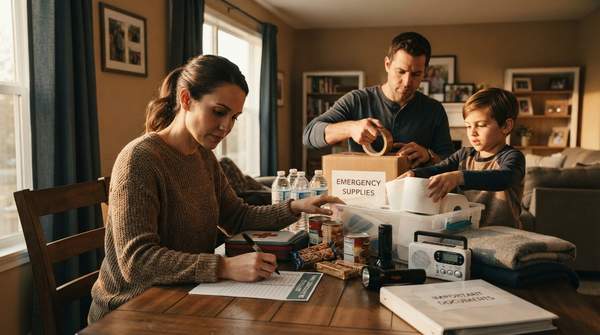
Start with the basics every household needs. The National Weather Service's emergency supplies guidance recommends one gallon of water per person per day, along with non-perishable food—and if that food is canned, a manual can opener belongs in the kit beside it. Light and information matter next: a flashlight with extra batteries, a battery-powered radio, and a NOAA Weather Radio so you can receive alerts even if the power and cell networks fail.
Safety and sanitation items round out the core. The Weather Service list includes first aid supplies such as bandages, ointment, and disinfectant wipes; toilet paper and bags with ties for personal sanitation; a whistle to signal for help; a dust mask or cotton t-shirt to filter the air; plastic sheeting and duct tape to shelter in place; and a wrench or pliers to shut off utilities. Add a sleeping bag or warm blanket for each person, a change of clothes suited to your climate, cups and utensils, and paper and pen.
Finally, tailor the kit to your household. The Weather Service recommends formula and diapers if there is an infant, and extra pet food if there are pets. University of Georgia Extension authors Ashlee Tziganuk and Jermaine Durham note that most kits can be built gradually over time as supplies are gathered and updated—so an incomplete kit today is still better than none.
Crafting Your Family Emergency and Communication Plan
Supplies only help if everyone knows what to do with them. The National Weather Service's severe weather safety checklist urges families to make sure everyone knows what to do in certain situations: where each person will be during the day, and what to do if severe weather impacts your location. Decide beforehand where you will seek shelter, and make sure every family member can describe the plan without prompting.
Communication is the second pillar. Establish how family members will reach one another—text, email, or social media are all options—and practice the plan so connecting becomes automatic rather than improvised. Agree on an out-of-area contact if local lines are jammed, and write the plan down where everyone can find it.
Staying informed deserves equal attention. The Weather Service recommends having at least three ways to receive a warning: local television, a web page, a mobile app, AM/FM radio, the Internet, or NOAA All-Hazards Radio all qualify. Multiple methods ensure critical information reaches you even if one system fails, and the checklist suggests setting up a monitoring routine—checking weather information every hour on the hour when conditions threaten.
Storing and Maintaining Your Preparedness Supplies
Where your kit lives matters as much as what is in it. Ready.gov advises storing items in airtight plastic bags and placing the entire kit in one or two easy-to-carry containers, such as plastic bins or a duffel bag. Keep the home kit in a designated place, ready for a quick departure, and make sure all family members know where it is kept.
Because you cannot know where you will be when an emergency occurs, Ready.gov recommends preparing supplies for home, work, and cars. The work kit should support sheltering in place for at least 24 hours, with food, water, medicines, and comfortable walking shoes stored in a "grab and go" case.
Maintenance keeps the effort from going stale. Ready.gov's guidance is specific: store boxed food in tightly closed plastic or metal containers, replace expired items as needed, and re-think your needs every year, updating the kit as your family's circumstances change. An annual review—perhaps tied to a date you already remember, like daylight saving time—keeps batteries fresh and contents current.
Understanding Homeowner's Insurance for Severe Weather
The kit protects your family; insurance is supposed to protect everything else. But standard homeowner's policies have well-documented gaps. Flood damage is the clearest example: the Insurance Information Institute explains that separate flood insurance is available as a standalone policy through the National Flood Insurance Program (NFIP) and from some private insurers—but it is not part of a standard policy. Insurance agency guidance from Blue Ridge Risk Partners makes the same point: floodwaters from overburdened bodies of water or public drainage systems require flood insurance specifically.
Wind damage is more nuanced. Writing for Kin Insurance, Mandy Sleight notes that some policies exclude or limit wind coverage, and that homeowners may be able to add it back through an endorsement, a standalone windstorm policy, or—in some high-risk states—a state-run wind pool. She also flags a deductible trap: your policy may use a higher deductible for wind, hail, or hurricane claims than for other perils, and in some areas that deductible is a percentage of your home's insured value rather than a fixed dollar amount.
Water damage distinctions matter too. Ansay & Associates notes that rainwater entering through a storm-damaged roof or broken window is typically covered, while rising groundwater or overflowing bodies of water require separate flood insurance—and sump pump or sewer backup is usually excluded unless you have added optional coverage. Policy specifics vary by insurer and location, so review your own policy and ask your agent direct questions about flood, wind, and water backup coverage before storm season—not after.
Your Comprehensive Severe Weather Preparedness Checklist
Use this consolidated table to gather supplies and complete each planning task, checking off rows as you go. It merges the recommendations of Ready.gov, the National Weather Service, and UGA Extension into a single working document.
| Category | Item or Action | Key Detail |
|---|---|---|
| Food and Water | Water and non-perishable food | One gallon of water per person per day; minimum 3-day supply, though longer supplies may be prudent; include a manual can opener if packing canned food |
| First Aid and Hygiene | First aid kit and sanitation supplies | Bandages, ointment, disinfectant wipes; toilet paper and bags with ties; travel-size personal hygiene items |
| Tools and Safety | Flashlight, radios, and safety tools | Flashlight with extra batteries; battery-powered or hand-crank radio plus a NOAA Weather Radio; whistle, dust mask, wrench or pliers, plastic sheeting and duct tape |
| Comfort and Clothing | Bedding and clothes | Sleeping bag or warm blanket for each person; a change of clothes per person, warm if you live in a cooler climate; cups and utensils |
| Documents and Cash | Identification and records | Copies of identification, insurance information, banking records, and wills stored in a waterproof, portable container—crucial for recovery after an event |
| Household-Specific | Infant and pet needs | Formula and diapers for infants; extra pet food for pets |
| Family Plan | Communication and shelter | Establish how family members will connect (text, email, social media); identify where you will shelter; practice the plan |
| Alerts | Multiple warning methods | At least three ways to receive warnings—TV, app, AM/FM radio, Internet, or NOAA All-Hazards Radio—so one system failing does not leave you uninformed |
| Storage | Kit locations | Home kit in a designated, easy-to-carry container in a known spot; work kit for sheltering 24 hours in a "grab and go" case; supplies for cars |
| Maintenance | Annual review | Replace expired items, keep boxed food in tightly closed containers, and update the kit yearly as family needs change |
| Insurance | Coverage review | Confirm whether flood, wind/hail, and water backup are covered or excluded; ask your agent about separate flood insurance (NFIP or private) and wind deductibles |
Your Next Steps for Home Weather Preparedness
Homeowners should immediately begin assembling a basic emergency kit, establish a family communication plan, and review their homeowner's insurance policy for severe weather exclusions. You do not need to finish everything at once—UGA Extension's guidance that kits can be built gradually means this week's water and flashlight purchase is genuine progress.
The measurable indicator of readiness is threefold: a completed emergency kit, a documented family communication plan, and a confirmed understanding of common insurance coverage gaps. When all three exist, your household can face a watch or a warning knowing it has the supplies, the plan, and the financial protection that official guidance says matter most.
Sources
- Build A Kit — READY
- Building a Home Emergency Kit — CAES Field Report
- Emergency Supplies Kit — Weather
- Severe Weather Safety Checklist
- Which disasters are covered by homeowners insurance? - Triple-I® — III
- Does Home Insurance Cover Wind Damage? Exclusions & Deductibles — Kin Insurance
- What Does Home Insurance Cover During a Summer Storm? — ANSAY