Local historical societies protect historic Main Street buildings through three core functions: documentation, research, and advocacy. Documentation creates a lasting record of a building's physical features; research uncovers the historical significance that justifies protecting it; and advocacy works to influence policy and public opinion in favor of preservation. Together, these functions form the backbone of community-led preservation projects, from the first archival search to the adoption of formal design guidelines. For property owners and residents, understanding this model clarifies exactly where a historical society fits—and where their own participation can help.
Function 1: Documentation – Recording Architectural Heritage
Documentation is the foundational work of preservation: recording what a historic building actually looks like, in detail, before it changes or disappears. The University of Texas School of Architecture describes this as a process of meticulous fieldwork in which documenters "observe, measure, and record the physical attributes and conditions of the buildings." For a Main Street commercial block, that can mean photographing facades, mapping building footprints, and noting architectural features and their condition.
Community members can carry much of this work themselves. The Community Tool Box, a public-service resource maintained by the University of Kansas, lists photography and documentation, community surveys, and mapping among the concrete ways volunteers contribute to preservation. The same guide notes an important boundary: volunteer participation should complement, not replace, professional expertise where specialized construction, conservation, archeology, safety, or technical work is required.
The value of documentation is cumulative. A photographic survey taken today becomes the baseline record against which future alterations, deterioration, or disasters are measured. When a question later arises about whether a storefront's original configuration included transom windows or a cornice, the society's files—not memory—are what settle it.
Function 2: Research – Uncovering Historical Significance
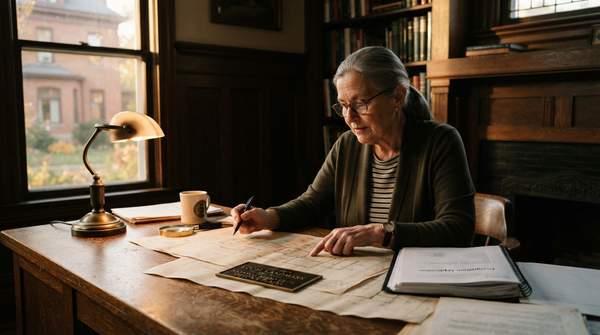
Research answers the question documentation alone cannot: why does this building matter? The University of Texas account of student documentation projects notes that the work involves "conducting research, analyzing primary and secondary sources, and interviewing experts or local community members who may have knowledge about the structures." Historical societies apply the same methods—deeds, newspapers, maps, photographs, and oral histories—to establish a building's date, architect, occupants, and role in the street's commercial development.
The University of Kansas guide identifies historical and archival research and oral-history projects as core community preservation activities, alongside walking tours and mapping neighborhood history. These efforts matter because preservation decisions depend on context: a building's architectural style, its place in local development patterns, and its associations with people or events all shape what treatments are appropriate.
Research also feeds directly into official processes. When a community sets out to create design guidelines for a historic district, the Michigan Main Street Center's guidance calls for thorough historical research to understand the area's significance, architectural styles, and urban development patterns. The historical society's files are often where that research begins.
Function 3: Advocacy – Championing Preservation Efforts
Advocacy converts records and research into influence. The clearest institutional example in the evidence comes from the Society of Architectural Historians, which issues position statements on issues of concern to its community and whose Heritage Conservation Committee leads preservation advocacy efforts on the society's behalf. At the national level, the society also signs on to letters and statements organized through the American Council of Learned Societies.
A local historical society works on a smaller scale but with the same logic: it speaks for historic resources that cannot speak for themselves. That can mean commenting on proposed demolitions or alterations, supporting designation efforts, and keeping preservation visible in public debate. The University of Kansas guide adds public education and interpretation to this sphere—walking tours, community events, and cultural programming that build the constituency a preservation effort needs to survive.
Advocacy is also where the three functions converge. Documentation supplies the evidence, research supplies the significance, and advocacy uses both to persuade decision-makers and neighbors.
The Three Pillars of Architectural Preservation by Historical Societies
The table below sorts the activities named in the evidence into the three-part functional model, showing what each function involves and what it contributes to preserving a historic building.
| Function | Key Activities | Contribution to Preservation |
|---|---|---|
| Documentation | Photography and documentation; community surveys and mapping; observing, measuring, and recording physical attributes and conditions | Creates a foundational record of a building's features and state, usable as evidence for later decisions and monitoring |
| Research | Historical and archival research; oral-history projects; analyzing primary and secondary sources; interviewing experts and community members | Uncovers the historical context and significance that inform preservation decisions |
| Advocacy | Position statements; committee-led conservation efforts; public education and interpretation; community events and cultural programming | Influences policy and public opinion to protect historic resources and build support |
Read together, the table shows the division of labor: documentation captures what exists, research explains why it matters, and advocacy acts on both. A society strong in one function but weak in another will struggle—for example, records without advocacy rarely stop a demolition.
A Community-Led Preservation Project: Historical Societies in Action
The three functions become most visible inside a real project. The Michigan Main Street Center outlines the typical sequence for developing preservation design guidelines, and a historical society's work maps onto each stage.
- Initiate the project and form a steering committee. The Michigan guidance calls for a committee that includes city planners, local business owners, residents, historians, architects, and preservationists, with clearly defined objectives such as preserving historical character, encouraging economic development, and improving the public realm. A historical society typically supplies the historians—and often the initial push.
- Conduct historical research and assessment. The committee researches the area's historical significance, architectural styles, and urban development patterns. Here the society's archives, photographs, and oral histories are the working material.
- Develop preservation guidelines. Georgia's Department of Community Affairs handbook specifies that guidelines for new construction—covering locations, setting, setbacks, size, height, styles, and features such as windows, doors, and roofs—should be based on preservation goals developed through a public planning process, with new construction complementing rather than replicating historic features.
- Engage the public throughout. San Francisco's planning department's design-guidelines effort illustrates the practice: outreach through individual meetings with neighborhood groups and workshops, with public comments incorporated through correspondence, meetings, and workshops. Broad engagement is what makes guidelines reflect community values rather than a small committee's preferences.
At every stage, the society's functions recur: documenting buildings as the committee surveys them, researching as the guidelines take shape, and advocating for adoption once they are drafted.
Engaging with Your Local Historical Society for Preservation
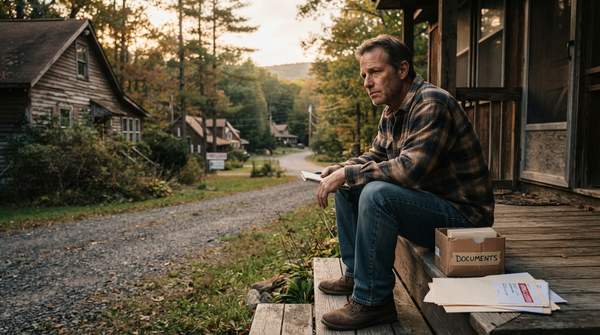
Property owners and community members should actively engage with their local historical society to initiate or support architectural preservation projects. In practice, that means bringing a threatened or neglected Main Street building to the society's attention, volunteering for documentation efforts such as photography, surveys, and mapping, and attending the public meetings and workshops through which design guidelines are developed. The measurable indicator of success is increased community participation in historical society-led preservation initiatives, such as public meetings for design guidelines or volunteer documentation efforts. This article covers the general functions of local historical societies in the United States; it does not provide legal advice or detail specific local ordinances, and its guideline examples are illustrative rather than comprehensive.
Sources
- Placemaking: The Role of Historic Preservation and Building Documentation in Creating Inspiring Public Spaces — School of Architecture
- Chapter 26., Section 7. Encouraging Historic Preservation - Main Section — CTB
- Miplace
- Advocacy - Society of Architectural Historians
- DCA
- Historic Preservation Design Guidelines — Sfplanning