The most sustainable thing you can do with your wardrobe is surprisingly simple: buy less, keep what you own alive longer, and only then—when a purchase is truly necessary—choose secondhand or certified sustainable options. That hierarchy matters. As a beginner's guide published by Scientific American puts it, the two simplest ways to participate in sustainable fashion are "to buy less and to ask questions." The stakes are real: the guide notes that as clothing production has doubled, the number of times each item is worn has dropped by roughly 40 percent. This article walks through a prioritized, three-step framework you can apply to any wardrobe decision.
Your Three-Step Sustainable Fashion Framework
Most sustainable fashion advice arrives as a long list of principles—transparency, ethical labor, circularity—without telling you where to start. A hierarchy solves that problem. The framework below orders your actions by impact: first reduce what you consume, then reuse and extend what you already own, and finally re-evaluate any new purchase against secondhand and certified options. Green America, a nonprofit focused on green business, frames the same sequence practically: shop secondhand when you can, and if you need to buy new, support green businesses or certified products. Each step answers a different question, and together they form a decision path you can follow every time you face your closet.
Step 1: Reduce Consumption – Buy Less, Buy Better
Reduction comes first because it prevents impact rather than offsetting it. Many people in developed countries significantly overconsume apparel, according to the Scientific American guide, which means the average wardrobe already contains more than enough. The practical move is to pause before buying: ask whether the item fills a genuine gap or merely a momentary want. When a purchase is justified, choose higher-quality garments you can wear for an extended period, as the sustainable fashion guide from Italian brand Oscalito recommends—prioritizing quality and durability over quantity. A well-made piece that lasts years displaces several cheap replacements, cutting both your spending and the resources embedded in your clothes.
Step 2: Reuse and Extend – Make Your Clothes Last
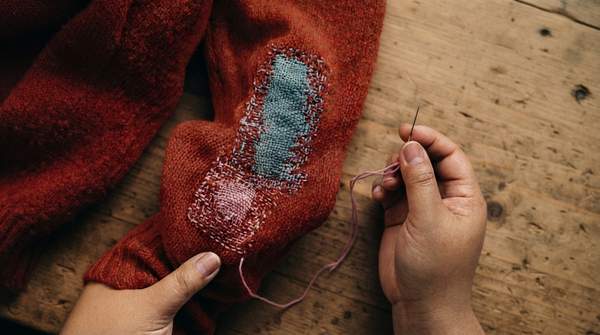
The second step keeps existing garments out of the waste stream. Oscalito's guidance is to carefully attend to cleaning and storing clothes so they can be worn longer—gentler washing and proper storage are the everyday workhorses of garment longevity. Repair is the other half of the equation: mending a seam or reattaching a button extends a garment's life without any new production. Creative reuse matters too. Before discarding an old shirt you no longer need, Oscalito suggests selling it to a second-hand store, organizing a clothing exchange party, or donating it to someone who will appreciate it. Restyling what you own—pairing forgotten pieces in new combinations—often satisfies the itch for "something new" without a single purchase.
Step 3: Re-evaluate New Purchases – Choose Consciously
When a new item is genuinely needed, the order of preference is clear: secondhand first, then certified new. Green America notes that thrift stores and charity shops remain budget-friendly options, while online platforms such as ThredUp and luxury consignment site TheRealReal are changing consumer perceptions of what secondhand shopping looks like. Secondhand is the next most sustainable choice after using what you own, because it extends the life of a garment that has already been produced. If you prefer certain items new—undergarments, for instance—Green America's advice is to support green businesses or products that carry credible certifications. The key is that "new" becomes a deliberate, evaluated choice rather than a default.
What to Look for: Eco-Friendly Materials and Certifications
When buying new, two tools help you judge a garment: its material and its certifications. On materials, Oscalito's guide recommends preferring natural, organic, and recycled materials over those derived from petroleum or requiring environmentally harmful extraction—think organic cotton, recycled polyester, hemp, and linen. These materials generally require less water, energy, and pesticides compared to conventional alternatives. On certifications, look for third-party labels that verify specific standards across the production process. A WWF guide to greenwashing, cited by Atmos, highlights B Corp, Fair Wear, Fair Trade Cotton, and GOTS as certifications to look out for; in Germany, the government-backed Green Button signals clothing made in an environmentally and socially sound way. Oscalito adds that knowledge of ethical certifications helps consumers make informed choices, because a label does the verification work you cannot do yourself.
Spotting Greenwashing: Red Flags for Consumers
Not every "green" label deserves trust. Greenwashing—deceptive marketing in which companies overstate their environmental efforts—misleads consumers into believing they are making ethical choices. The red flags are recognizable without expert knowledge. Watch for vague claims like "eco-friendly" or "natural" offered without specifics or data. Atmos reports that the EU has banned the use of terms such as "environmentally friendly," "biodegradable," "climate neutral," or "eco" without evidence, along with a total ban on carbon-offsetting claims—regulatory recognition of how misleading this language has been. The WWF rule of thumb is to look for businesses that comply with the three pillars of sustainability—environmental, social, and economic—and have the credentials to back it up. If a brand's sustainability story is all adjectives and no verifiable certification, treat it skeptically.
Your Sustainable Wardrobe Decision Framework
Use this matrix whenever you face a wardrobe decision. Work from the top down: the highest-impact actions require no purchase at all, and each lower row applies only if the one above it cannot meet your need.
| Priority | Action | Key Considerations |
|---|---|---|
| 1. Reduce | Buy less; choose higher-quality garments when you must buy | Prevents impact rather than offsetting it; reduces the need for frequent replacements and overall consumption |
| 2. Reuse | Extend garment life through careful cleaning, storage, repair, and creative restyling | Prolongs the life of apparel you already own; pass along unwanted items via resale, swap, or donation |
| 3a. Re-evaluate: secondhand | Shop thrift, charity shops, or online resale before buying new | Secondhand is the next most sustainable choice after using what you own |
| 3b. Re-evaluate: certified new | If buying new, choose green businesses and certified products | Look for eco-friendly materials (organic cotton, recycled polyester, hemp, linen) and certifications such as GOTS, Fair Trade, and B Corp |
| Check every claim | Screen for greenwashing before purchasing | Vague terms without evidence, irrelevant certifications, and unverifiable claims are red flags; demand transparency and third-party credentials |
The sequence of questions is the point: Do I already own something that works? Can I repair or restyle it? Can I find it secondhand? Only then—does a certified, well-made new option justify the purchase?
Making Sustainable Choices: Your Next Steps
Adopt a hierarchical approach to fashion consumption, prioritizing reduction, then reuse, and finally informed re-evaluation for new purchases. The decision is yours to make starting with your next wardrobe moment, and the framework above gives you the questions to ask. Success is observable: a noticeable decrease in new clothing purchases and an increase in garment lifespan through repair and creative styling. Track it simply—count the new items you buy this season against last, and note each garment you mend, restyle, or pass on rather than discard. Those two numbers, moving in opposite directions, are the measurable signature of a more sustainable wardrobe.
Sources
- A Fashionista’s Scientific Guide to Building a Sustainable Wardrobe — Scientific American
- What can I do to make my clothes more sustainable? — Green America
- Guide to Sustainable Fashion: Principles, Goals, and Green Certifications — Oscalito
- 101: A Guide to Sustainable Fashion — Atmos