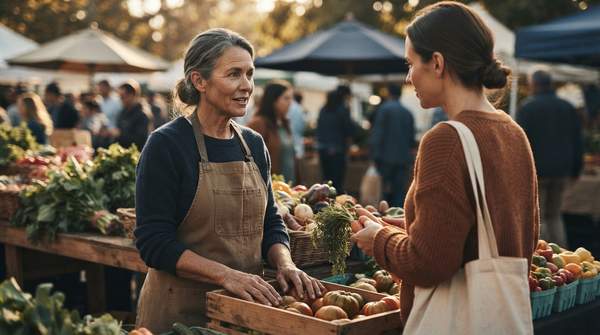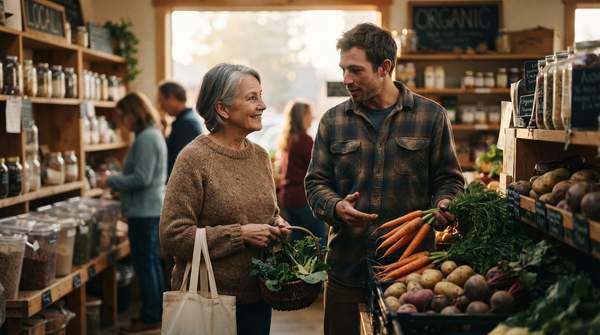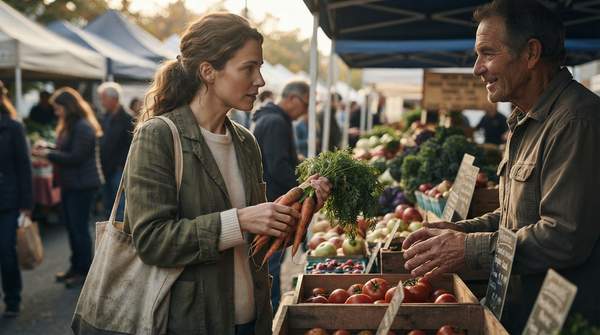
The best tool you can bring to a farmers' market isn't a canvas tote or a fistful of small bills — it's a short list of questions. Not every stall that looks rustic is selling food the seller grew, and not every market that uses the name "farmers market" operates on a farm-direct model. The reliable way to tell the difference is to know your region's seasons, understand what kind of market you're standing in, and ask vendors a few targeted questions about how their food was grown and when it was picked.
Why Farmers' Markets Matter
The promise of a farmers' market is freshness without the middleman. As FRESHFARM's Molly Scalise describes it, produce at these markets is "harvested at the peak of ripeness a day before or even the morning of the market," with farmers traveling "mere hours, not days" and fresh-picked items handed "straight from farmer to customer, without middlemen handling them along the way." That short chain is what shoppers are paying for: food that is fresher and, in Scalise's framing, tastier and more nutritious, with the added effect that growers keep a larger share of each sale and regional farmland is preserved.
But that promise is exactly what makes markets attractive to co-opt. Writing for FoodPrint, Kristen Link notes that "though the term 'farmers market' implies actual farm-fresh seasonal produce sold directly to consumers, it's easily co-opted for marketing" — a grocery chain can put the phrase in its name without any of the substance. Link's central question for shoppers is blunt: how can you tell if a stand is selling produce they grew rather than reselling wholesale or store-bought items? The rest of this guide is built around answering it.
Understanding Different Farmers' Market Types
Markets differ in character, and knowing which kind you're visiting sets realistic expectations. Link relays the advice of market researcher Anna Wolnik, who is writing a book on the modern farmers' market and urges shoppers to "know the market type."
At one end are what Wolnik calls "flagship" markets: large venues with a "festival atmosphere" designed to attract a wide range of residents and visitors. Expect more prepared foods and crafts here, and expect crowds. At the other end are "neighborhood" markets, which serve specific communities, focus on education, and deliberately curate local vendors — smaller in scale, but often closer to the farm-direct ideal.
A third category covers markets near hospitals or office buildings, meant for people working in the area. Wolnik's caution here is worth remembering: these markets "may not always prioritize local food and may even allow one farmer selling for a few other farms." That's not necessarily a bad market — but it is one where the vetting questions below matter most, because convenience and locality are not the same thing.