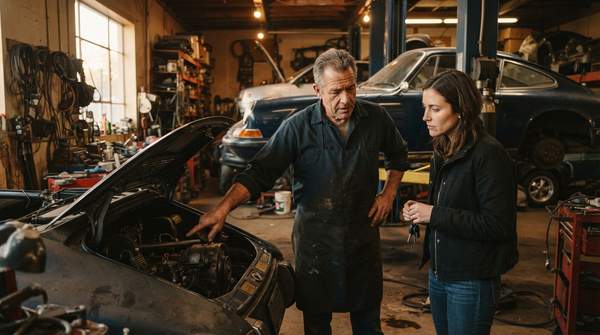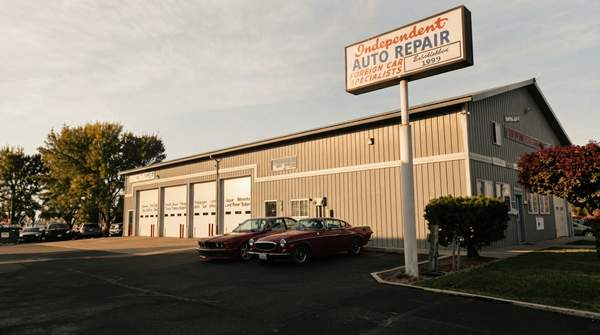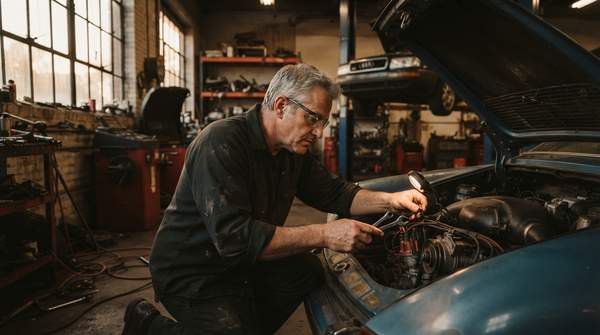
The best type of auto repair shop depends on three things: what's broken, how old your car is, and whether it's still under warranty. For warranty work and complex software issues, the dealership's brand-specific expertise and OEM parts are hard to beat. For routine maintenance and common repairs on out-of-warranty vehicles, an independent general repair shop usually delivers better value — in Consumer Reports' survey of car owners, independent shops received the highest scores for satisfaction with price, while dealerships tended to score lowest. And for a single complex problem like a transmission failure, or for a niche vehicle such as a European or electric car, a specialized independent shop offers focused depth that generalists can't match.
Understanding Your Auto Repair Options
Most car owners encounter three broad categories of repair shop. General auto repair shops, also called independent workshops, handle routine maintenance, diagnostics, oil changes, and brake work across many makes and models. Dealership service departments are run by vehicle manufacturers or dealerships and service specific brands, under warranty or beyond. Specialized service centers focus either on niche repairs — transmissions, exhausts, tires and wheels — or on specific vehicle types.
Industry classification guides identify the general independent workshop as the most common type, and for good reason: oil and filter replacement and similar maintenance services are the most common automotive repair work, so the everyday workshop doing brake pad replacements and filter changes is where most owners end up most often. Specialty shops split into two groups, according to automotive educator Mechanic Shop Femme: those you visit only for a specific issue, such as transmission repair facilities, auto electricians, and wheel repair shops, and those specializing in particular kinds of cars — hybrids, European cars, electric vehicles.
Dealership Service Centers: Manufacturer Expertise at a Premium
Dealership service departments offer a comprehensive list of services, from standard oil changes and tire rotations to major engine or transmission work, and TrueCar notes that smaller independent mechanics can face limits in equipment or training that dealerships do not. Their core advantage is privileged access to manufacturer information: original equipment manufacturer data, technical service bulletins describing known complaints and recommended repair procedures, and repair procedures keyed to specific models. As vehicles grow more complex, faster access to that critical information increasingly determines diagnostic efficiency.
Dealership technicians also receive ongoing, brand-specific training to handle complex vehicle systems — training that industry voices describe as essential rather than optional. The trade-off is price and consistency. In Consumer Reports' survey, dealership service departments were a mixed bag that varied greatly by brand: Acura, Lexus, Mazda, and Volvo departments scored well for overall satisfaction, while Jeep and Kia dealerships fell to the bottom of the list. Costs are typically the highest of the three options, a function of overhead, specialized tools, and OEM parts.
Independent General Repair Shops: Versatility and Value
For out-of-warranty cars, the independent general repair shop is where most owners land. These workshops handle a broad range of services across various makes and models, and they were the only service-facility category besides one national chain to receive top scores for overall satisfaction in Consumer Reports' survey — higher marks across the board than any other category, including dealerships.
Those looking to save money may find independent mechanics more affordable than a dealership service center, though prices vary widely between individual shops. Customer service can be a real strength: when owners are hands-on and involved in their businesses, service is often phenomenal, though not all independents are alike, so it pays to shop around until you find one that fits. A repeat customer benefits from a mechanic who becomes familiar with their specific vehicle over time. The caveat is that expertise levels differ significantly, making it important to research individual shops before committing.
Specialized Independent Shops: Focused Expertise for Specific Needs
Specialty shops occupy the third corner of the landscape, and they exist for two distinct reasons. The first is problem depth: a transmission repair facility or auto electrician works on one type of failure every day, which builds pattern knowledge a generalist rarely develops. The second is vehicle depth: shops that specialize in hybrids, electric cars, or European brands invest in the tools, training, and experience those vehicles demand.
These shops offer deep, focused expertise for niche automotive needs, and many independents specialize in specific brands or even vehicles, with some service centers concentrating on cars from particular regions of the world. For a single expensive, complex repair — or for an uncommon vehicle — that focus can outweigh the broader convenience of a general shop. The practical caveat is that cost and parts sourcing practices vary by individual shop, so ask directly about both before authorizing work.
Auto Repair Shop Decision Matrix
The matrix below maps each shop type to the situations where its documented strengths apply, synthesizing consumer survey findings and industry commentary on cost, expertise, and parts.
| Shop Type | Best For... | Typical Cost | Technician Expertise | Parts Used | Key Advantage |
|---|---|---|---|---|---|
| Dealership Service Center | Newer vehicles, warranty work, complex software and electronics, safety-related issues | Generally the most expensive option | Brand-specific training; access to manufacturer data and technical service bulletins | Primarily OEM parts designed for the vehicle | Direct line to the manufacturer |
| Independent General Repair Shop | Routine maintenance, common repairs, older out-of-warranty vehicles | Often more affordable; highest price-satisfaction scores in owner surveys | Broad experience across makes and models; varies by shop | Varies by shop — ask about sourcing | Top overall satisfaction and value for everyday work |
| Specialized Independent Shop | Single complex repairs (e.g., transmission) or niche vehicles (hybrids, EVs, European cars) | Varies by shop — inquire directly | Deep, focused expertise in one repair type or vehicle type | Varies by shop — inquire directly | Pattern knowledge generalists rarely develop |
When to Choose Which Shop: Specific Scenarios
The age of your car is the strongest single predictor of where owners actually go. Consumer Reports found that about 80 percent of drivers with a model-year 2023 car took it to the dealership, while only 18 percent took a model-year 2000 car there — the older the car, the less likely its owner was to use a dealer. Warranty status amplifies that pattern: a repair covered by the manufacturer's warranty belongs at the dealership.
Complex software and electronics also favor the dealer, because out-of-warranty repairs often depend more on diagnostic skill than brand affiliation — but software-driven and safety-system issues require the proprietary tools and bulletins that dealerships hold. As one repair guidance article puts it, "the dealership is ideal for certain categories of work," and good shops will tell you when the dealer is actually the better option for your situation; the best shop is the one that can reproduce your symptom, verify the data, and explain the failure mode.
For a standard brake job, oil change, or filter replacement on a car that's out of warranty, an independent general shop is usually the value choice. For a transmission failure or a European or electric vehicle needing dedicated expertise, a specialist is worth seeking out — and if you live a considerable distance from a dealership, an independent may be the only practical option.
Making Your Informed Choice
Car owners should evaluate their specific repair need, their vehicle's age and warranty status, and their budget to select the most appropriate shop type — resisting the reflex that "dealer = safest." Cost comparisons here are general tiers; actual prices will vary significantly by location, vehicle, and individual shop, and this guidance doesn't cover auto body or collision repair or endorse any specific business or chain.
The measurable indicator of success is simple: the reader successfully identifies the optimal shop type for their next repair or maintenance task. Before booking, confirm the two facts that drive the decision — whether the car is under warranty, and whether the repair is routine or involves brand-specific software or a single complex system — and match those to the matrix above.
Sources
- Car Owners Favor Independent Repair Shops - Consumer Reports
- Should I Get My Car Repaired at a Dealership or a Private Mechanic? - Mechanic Shop Femme
- Which is Better for your Car: Dealership vs. Independent Mechanic? — TrueCar Blog
- OEM Repair Info: A Guide To Technical Service Bulletins — SNAPON
- Technician Training Must Be Ongoing — Auto Dealer Today
- Independent Specialist or Dealer? How to Decide by Job — motronix